
HERE FOR CCAD, TODAY AND TOMORROW.
The Here for Change campaign was about exactly that—change. And change starts with changemakers, the people who believe in the power of creativity to reshape tomorrow by creating change today.
Meet the donors who are here for change. These three visionary individuals have chosen to invest in the future of CCAD, translating their own passions for change into the next generation of artists, innovators, and creators. Their gifts go beyond donations—their belief that creativity can make a difference drives them. Thanks to these donors, and many more like them, we’re continuing to turn belief into a lasting legacy.
Student Scholarships
Gil Cloyd Read story
Faculty Excellence & Student Success
Bob Falcone Read story
Campus Enhancements
Peter Ho Read story
Here for Student Scholarships
Motivated to alleviate the pressures of paying for college.
To earn his way through college and veterinary school in the 1960s, Gil Cloyd worked some pretty odd jobs: House painting, dog grooming, short-order cook, soda delivery truck driver. He’d do it all over again.
“It was good for me and my personal development; you have to learn how to really plan your time,” Cloyd says. “When I got out of veterinary school I had a small federal loan, but debt was not an issue. It’s a totally different situation today for young people going to college. It limits what they can do sometimes in life. I had it a lot easier. It was much easier back in the ’60s for talented young people to get their education.”
This is what drives Cloyd’s philanthropy: opening access and alleviating financial pressures that create obstacles for students and their families. It’s in this spirit that he and his wife Susan created the Cloyd Endowed Scholarship in Animation. The scholarship provides annual funding for Animation students who’ve shown they are leaders in their field, either at work or in the classroom. The scholarship is renewable if the recipient continues to demonstrate leadership.
“I’m very sensitive to the cost of education and the difficulties it can create for talented young people and their families to achieve and to be able to get through and have a quality post-secondary education.”
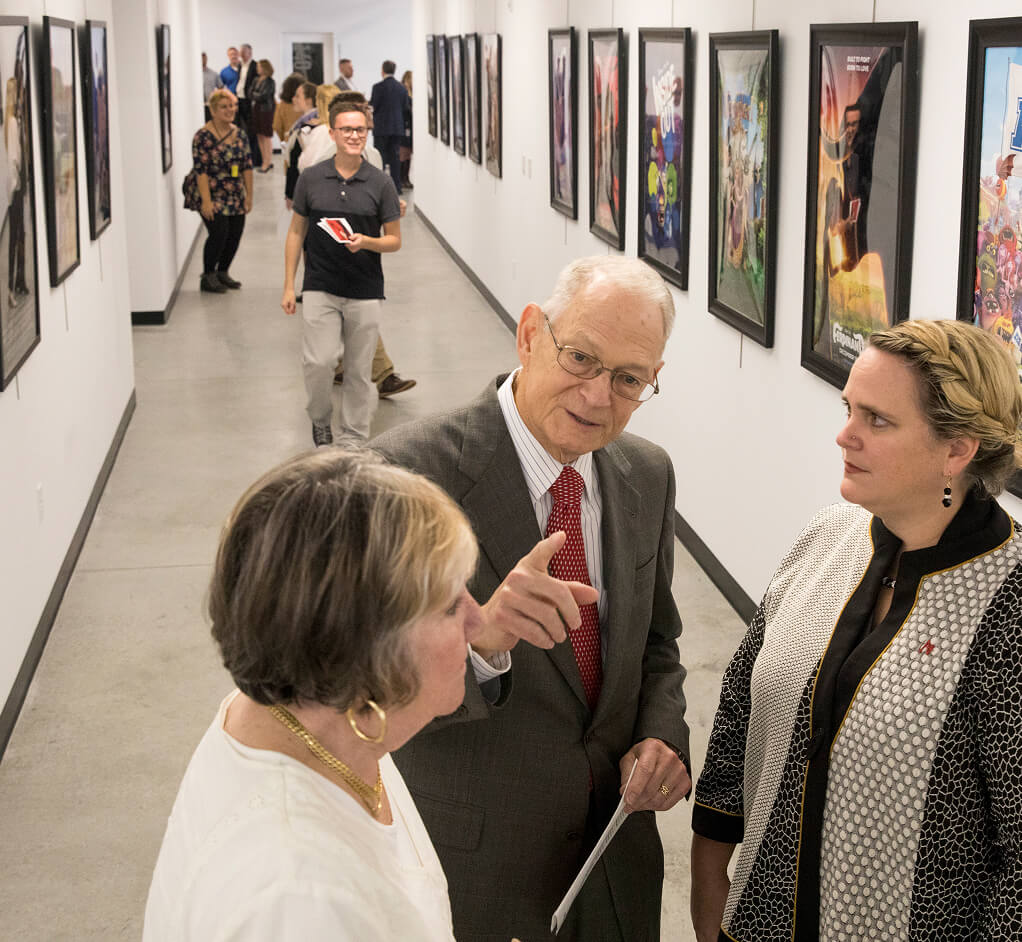
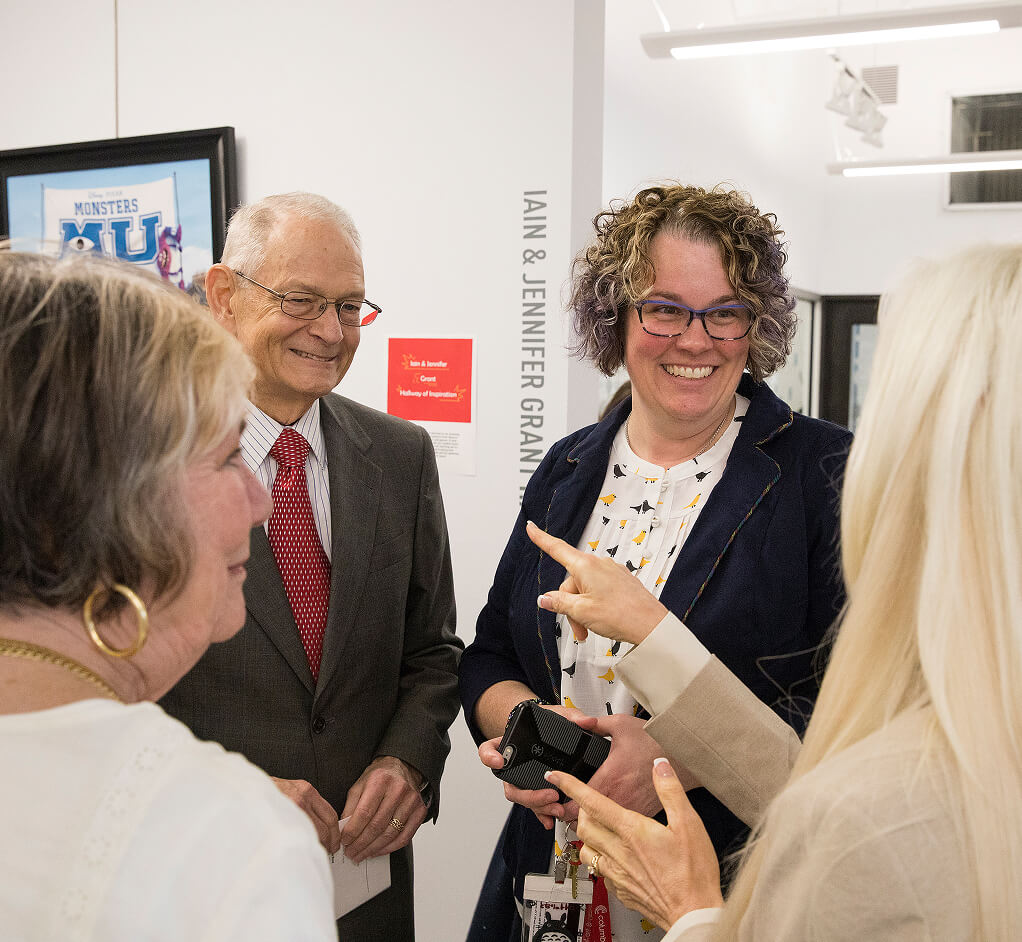
In 2018, the Cloyds generously supported the Cloyd Family Animation Center, bringing leading-edge animation equipment and spaces to CCAD. Cloyd respects and admires the leadership of Charlotte Belland, Chair of Animation and Professor.
“What I’ve liked about Charlotte is that she is an outstanding teacher, but she also focuses on the full development of students in terms of not just the skill set but ‘what do you need to be successful in your future?’ You’ve got to be very good at storytelling. You’ve got to be able to work in teams,” Cloyd says. “Secondly, it’s her personality. Charlotte’s always a glass-half-full, big smile on her face. Sometimes it’s tough for the students. And to have a big personality like Charlotte’s around raises everyone’s good feelings. She’s always trying to get better.”
In 2014, Cloyd co-founded the Ohio Film Group and Lengi Studios and built offices right around the corner from CCAD on Broad Street. Together, the two entities offer animation and production services for films, employing students and alumni. They recently completed “Sneaks,” the first full-length animated feature film made in Ohio for global distribution. “Now there’s a very large number of CCAD graduates who have been part of a major animated film that will be circulated worldwide,” Cloyd says.
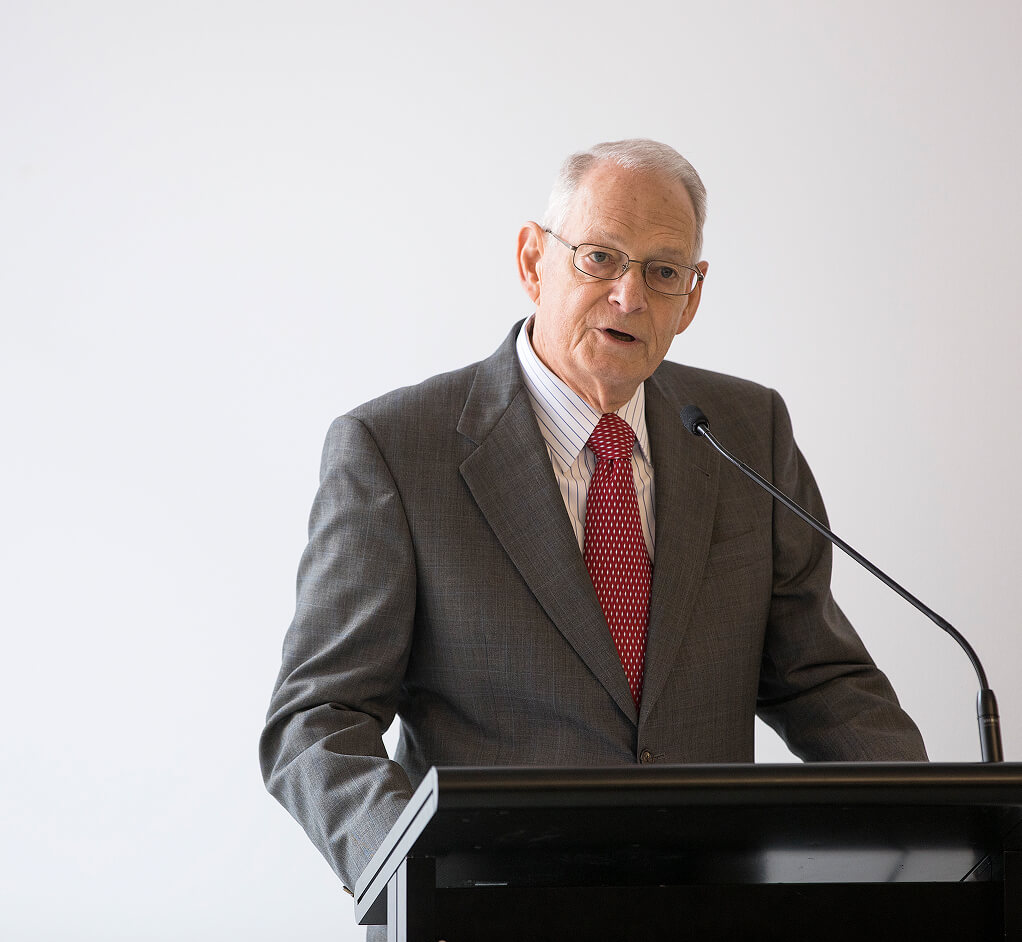
“I’m very sensitive to the cost of education and the difficulties it can create for talented young people and their families to achieve and to be able to get through and have a quality post-secondary education,” says Cloyd, who is also a member of the CCAD Board of Trustees. “My passion area is helping students make it to where they can financially afford to complete what they’re doing.”
Cloyd earned his Doctor of Veterinary Medicine degree from Ohio State in 1969, went into private practice and then began work for Procter & Gamble, where he became involved with Research & Development and eventually the technological side of R&D. He retired as the company’s chief technology officer in 2008.
“While they’re quite different in one respect, there’s a lot of commonality between product development in the consumer product sector and developing outstanding animated films,” Cloyd says. “I used to tell my folks at P&G, think of yourself as an artist and all the other people you could interact with and what you’re doing, it’s like paint on a palette. Do you want to limit what you can do or do you want to open yourself to really explore? If you’re open-minded, you can get good advice. It can be some tough critique, but it’s very valuable. Sometimes you’ll get a great idea, something you didn’t even think about as you’re trying to finalize your creation, and that’s very important in animation, too.”
WHY I GIVE
“There are just a lot of talented young people in animation in Columbus. I think that providing them an opportunity to not leave central Ohio and still get involved in a very attractive animation project is great. And from the scholarship standpoint, helping young people achieve a real quality education, that goes back to my roots. I was the first person in my family to go to college, and I really like supporting talented young people and helping them get through their post-secondary education.”
Here for Faculty Excellence
Support of faculty and students driven by the memory of two incredible women.
When Dr. Bob Falcone (Master of Fine Arts in Visual Arts, 2016) entered CCAD, he was in his 60s. He’d worked as a trauma and critical care surgeon for 20 years. He was working in hospital and healthcare administration. He’d been an artist his entire life, but he was ready to start a practice from scratch. The experience at CCAD changed him as an artist and as a person.
“The farther you go up in the food chain in administrative circles, the fewer people you have telling you the truth,” Falcone says. “CCAD was a place where people would tell me the truth. Are you willing to accept criticism and either improve or change? Good lessons, but they’re hard to learn. I think everyone needs someone to tell them the truth. There are countless stories about Caesar having a slave whispering in his ear, ‘Remember you are mortal, memento mori.’”
Mortality has touched Falcone’s life repeatedly outside the operating room. His wives Dr. Annie P. Miller and Deborah Meesig, MD, JD died in 1998 and 2024, respectively. Life and what comes after form the primary questions of his art practice. “I’m really fascinated by the presence of life and what happens when it’s no longer there. I’ve looked at it from many ways in many different angles and many different mediums,” Falcone says.
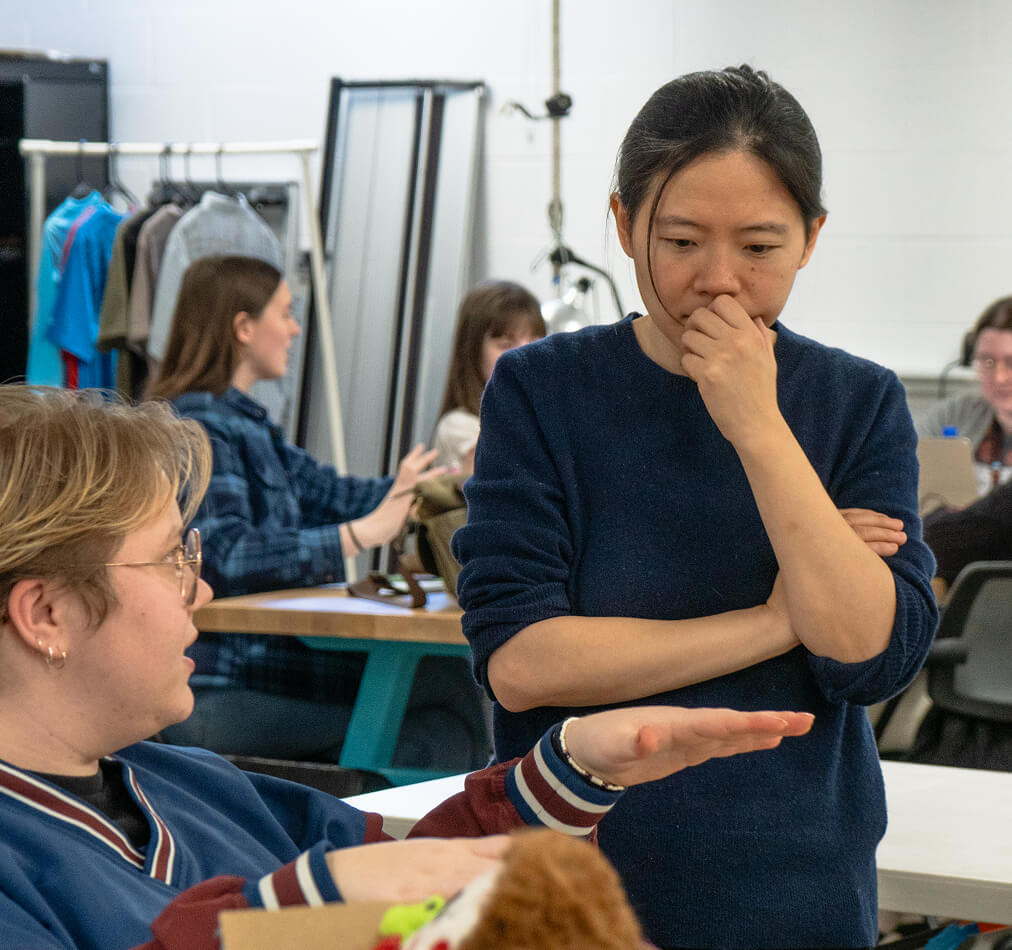
Gweny Jin, assistant professor in Design & Social Practice, is the first recipient of the professorship. She calls the position humbling and inspiring. “It really offers me the opportunity to really keep expanding, to ask the questions,” Jin says. “I’m happy that I’ve been offered this chance, it’s like having one’s own room.”
After graduating with his MFA, Falcone stayed connected with CCAD, joining the board and learning more about the organization from fresh perspectives. “It’s a very well-run organization, and it’s an outstanding college in that it prepares people for a future, whether it’s in the arts or not,” Falcone says. “Art is very, very important to creativity and helping you achieve what you want to do and to communicate your thoughts and express them clearly and effectively. To take criticism effectively and help mold that into a product that makes sense, not only to you but to those around you.”
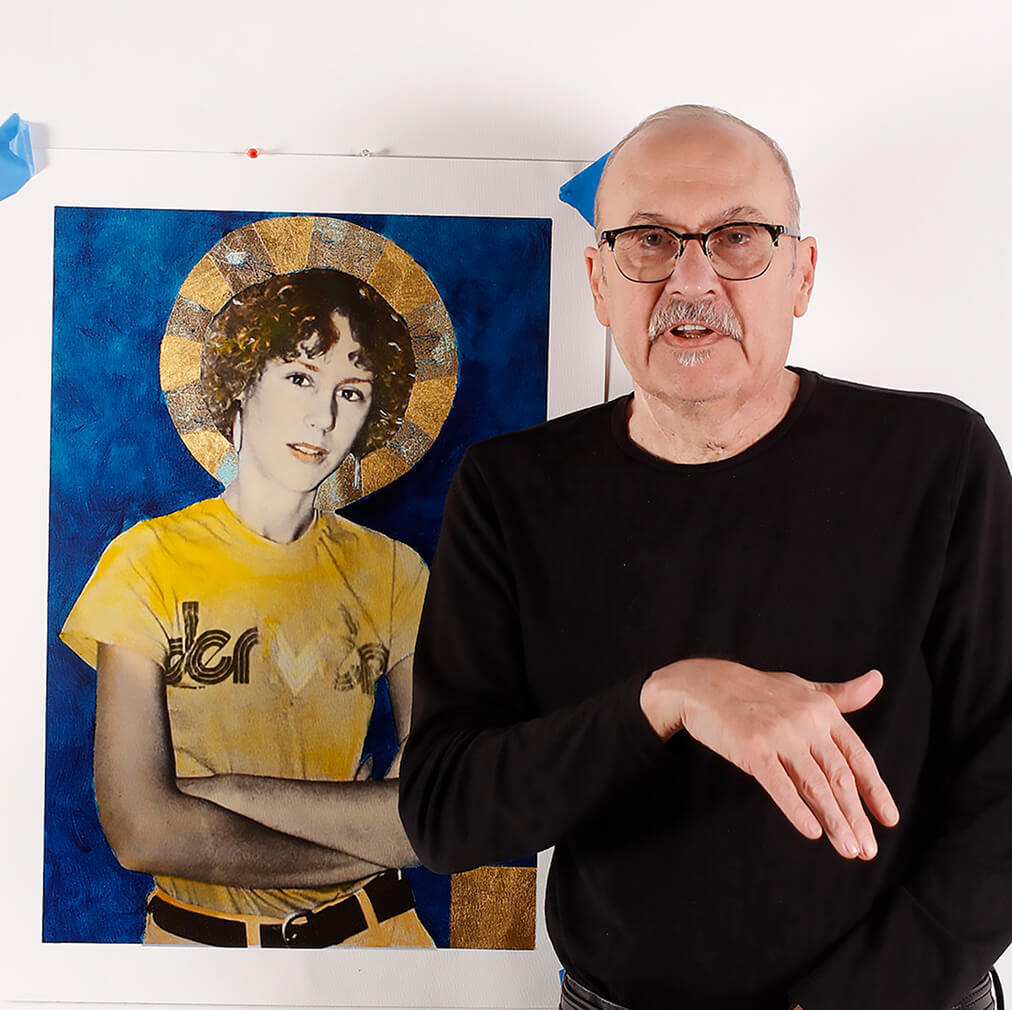
In tribute to Meesig, Falcone established the Deborah Meesig Endowed Scholarship Fund. Meesig died in 2024 at 69 of cancer. Like Falcone, Meesig was a surgeon and hospital administrator. She also was a talented seamstress who designed and made her own clothes.
“She was really good, but she was really humble about it,” Falcone says. The fund will be directed toward female students “like her, who came from nothing, with very little in the way of support and made something out of themselves because they decided to or got lucky. And with a little help, there’s girls out there who could do the same,” Falcone says.
Earlier, Falcone established the Annie P. Miller Endowed Professorship. Miller died in 1998 at the age of 41 in a car crash. In addition to being a plastic surgeon recognized for her work on post-cancer breast reconstruction, she was a glass artist whose work was exhibited in juried festivals.
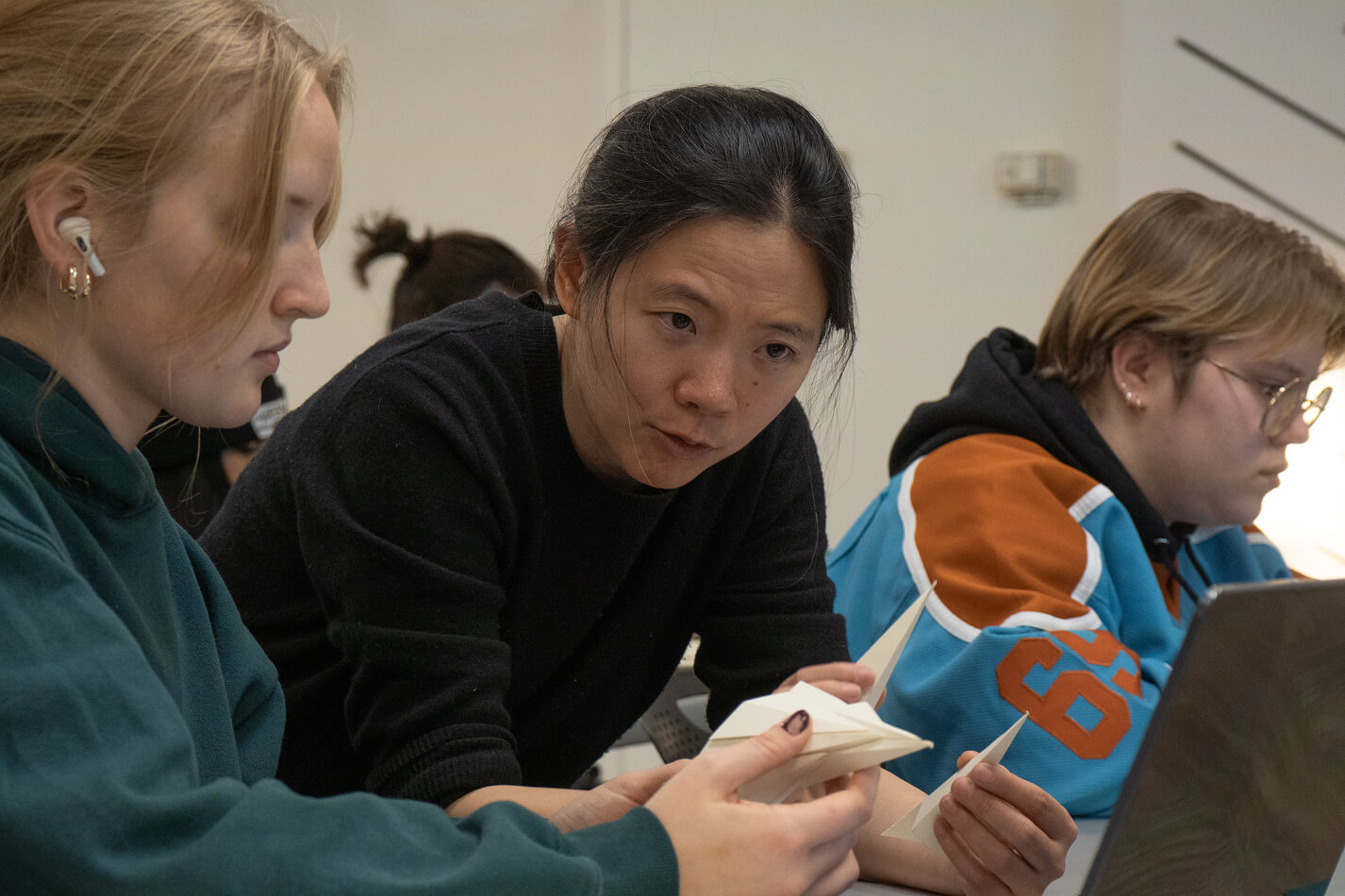
“CCAD was a place where people would tell me the truth. Are you willing to accept criticism and either improve or change? Good lessons, but they’re hard to learn. I think everyone needs someone to tell them the truth.”
WHY I GIVE
“Art is very, very important to creativity and helping you achieve what you want to do and to communicate your thoughts and express them clearly and effectively. To take criticism effectively and help mold that into a product that makes sense, not only to you but to those around you. CCAD is a jewel. I think it’s underrepresented. We saw an opportunity there, and that’s something [my wife Deborah Meesig] was really interested in. We said, ‘We’ll sow that into something tangible over the next few years because there’s a need and it’ll make a difference.’”
Here for Campus Enhancements
A place to belong.
Across continents and generations.
In his native Hong Kong, a fortune teller once told Peter H. (Industrial Design, 1977) he would not live past 50. He would not, his friend pointed out, complete even one life in the Chinese sexagenary cycle that corresponds to each of 12 animal signs and five elements. At 46, Ho started swimming for fitness. “I passed 50, I passed 60, I passed 70, I passed 80. And I still swim,” Peter says.
Peter has been defying predictions, probabilities, and assumptions his entire life. That he wound up in the United States, a student at CCAD at the age of 29, in the 1970s, was the result of a serendipitous alignment of factors. He has never taken it for granted and, after a self-made career, is expressing thanks by giving back.
A student commuter lounge in the forthcoming Center for Creative Collaboration will be named for Peter, in gratitude for his financial support of CCAD. A renovation of existing Battelle Hall, the center will serve as a making hub and gathering space where all students can feel at home—something Peter sought when coming to CCAD.
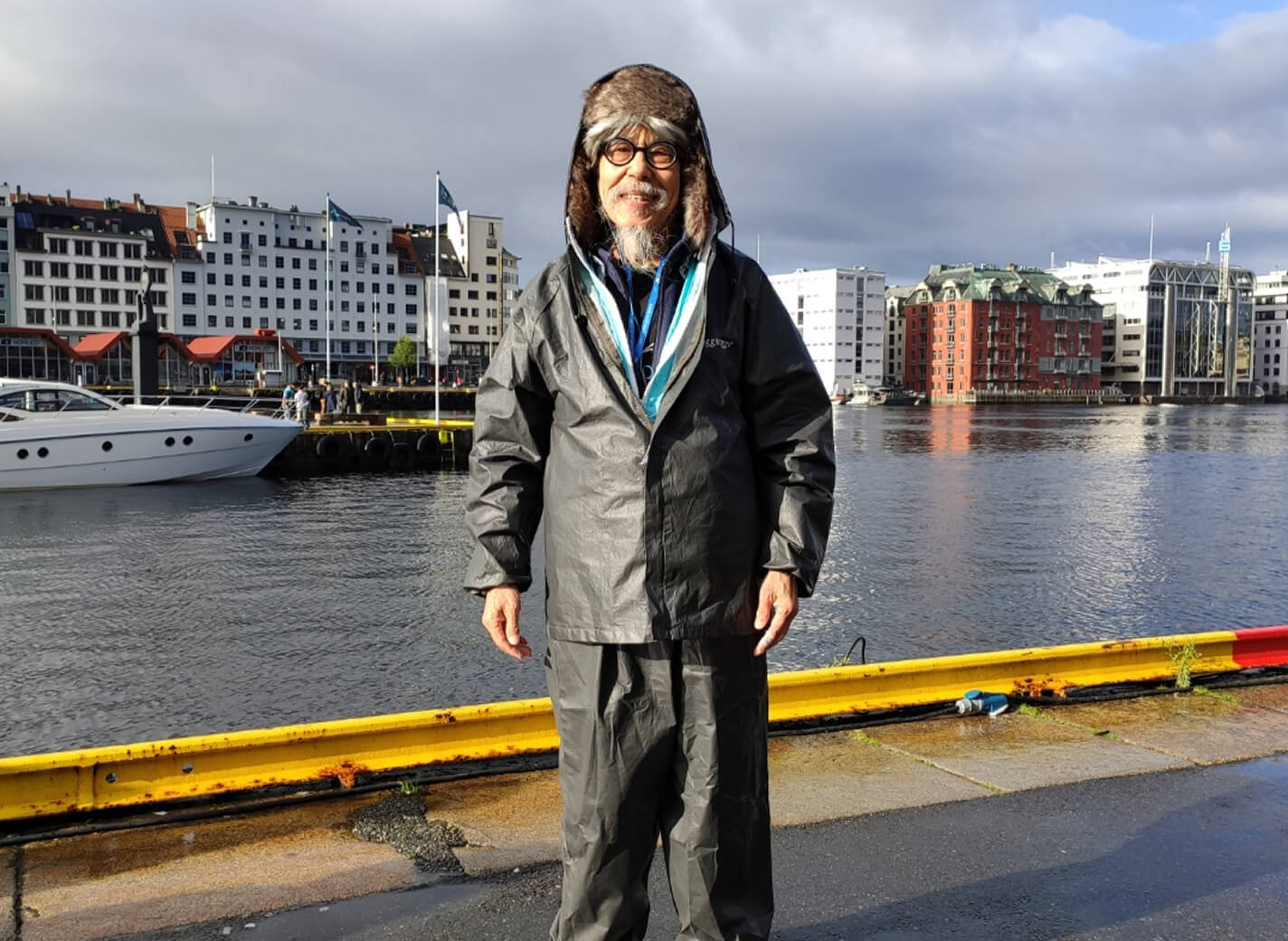
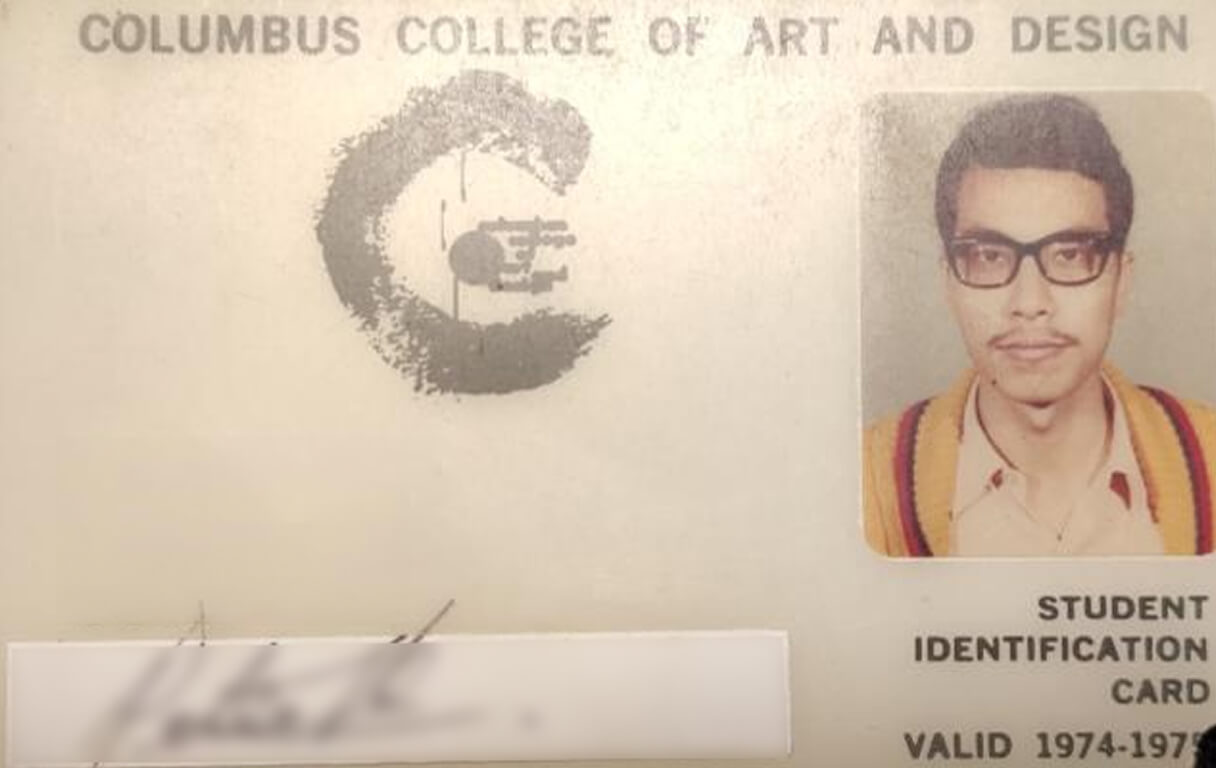
Peter thrived at CCAD, especially after he earned enough money to buy himself a Volkswagen van, which allowed him to be more independent.
“I’m very good at problem solving. My motto is, I use the least of the resource to get the most out, to complete the design, to solve the design problem,” he says. “And when I use material, I try to preserve it without cutting it up or breaking it up so that I can reverse it and have the material as it was before it’s used.”
This economic approach has served Peter in every corner of his life since arriving in the United States. From Columbus, he completed graduate studies in industrial design at the University of Illinois at Urbana-Champaign. He tried consulting but was uncomfortable with its feast-or-famine rhythm. So, he struck out on his own and eventually landed steady work marketing Hong Kong factories’ products at wholesale trade shows in the United States. The sales he won at those trade shows grew factories and companies. Peter saved, lived frugally, and has lived on the northwest side of Chicago with his partner Ken for decades.
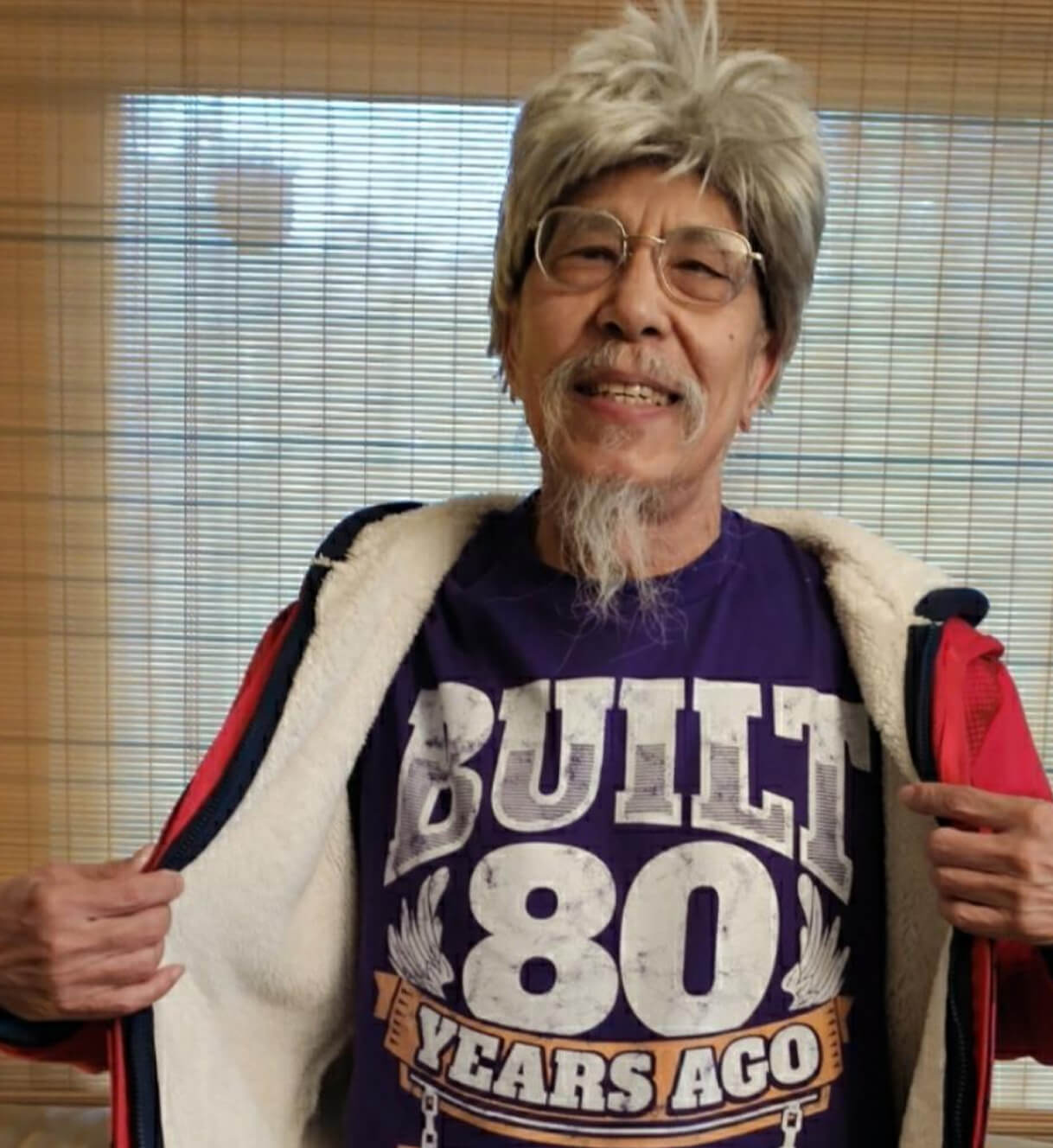
Peter was born in 1944 in mainland China. His grandparents were wealthy landowners until communists overtook the Chinese government. The family fled to Hong Kong to avoid political persecution during the Great Leap Forward. Peter had been working at Hong Kong Bank for 10 years after high school, and still living with his family, when he decided to enroll for a 3-year art and design degree at the University of Hong Kong. He entered college with little confidence. “I was raised by abusive parents, and they were always yelling, [saying] I’m stupid and worthless. And that was what I felt. Until I took the art classes, and I met some friends and we worked together.”
Through a connection between a Hong Kong artist and former CCAD President Joseph Canzani, CCAD accepted several students from Hong Kong on full-ride scholarships in the mid-1970s. Peter was astonished to be one of them. He found a required sponsor in the United States and arrived in Columbus, barred from legally working, with about $1,000 to live on.
His second semester, he got an under-the-table job washing dishes at a chop suey restaurant. “When I finished doing the dishes, the manager said, ‘Peter, go clean the toilet.’ I realized this is a wonderful learning experience. It humbles you. It makes you learn to respect other people’s jobs.”
His gift to CCAD is given in the spirit of a Chinese proverb he likes to repeat: A bit of fragrance clings to the hand that gives flowers. Giving back to the place that launched his American Dream helps students just like him, finding their way around campus for the first time. And it makes him feel great, too.
WHY I GIVE
“Without CCAD, I never would have imagined I could come to America, not in my wildest dreams. It’s changed my life completely. That’s why I am so appreciative.”
Help us foster the skillsets and mindsets that you’ll need to move your business forward by supporting The CCAD Way.

Change starts with our
students.